
Looking for an Email Marketing Alternative?
Thousands of teams have switched to Mailsend.dev for flat pricing, better deliverability, and full automation without the enterprise price tag.
Mailchimp Alternative
Mailchimp removed their free plan, raised prices based on contact count, and still locks advanced automation behind expensive tiers.

Klaviyo Alternative
Klaviyo's per-active-profile pricing becomes extremely expensive at scale - a 50k subscriber list costs $700+/month. Mailsend delivers the same ecommerce flows at a fraction of the cost.

ActiveCampaign Alternative
ActiveCampaign is powerful but complex, with a 4-6 week learning curve and per-contact pricing that gets expensive. Most teams use less than 20% of its features.

SendGrid Alternative
SendGrid's marketing features feel like an afterthought bolted onto a transactional email API. Teams that need both transactional and marketing email find Mailsend more purpose-built.

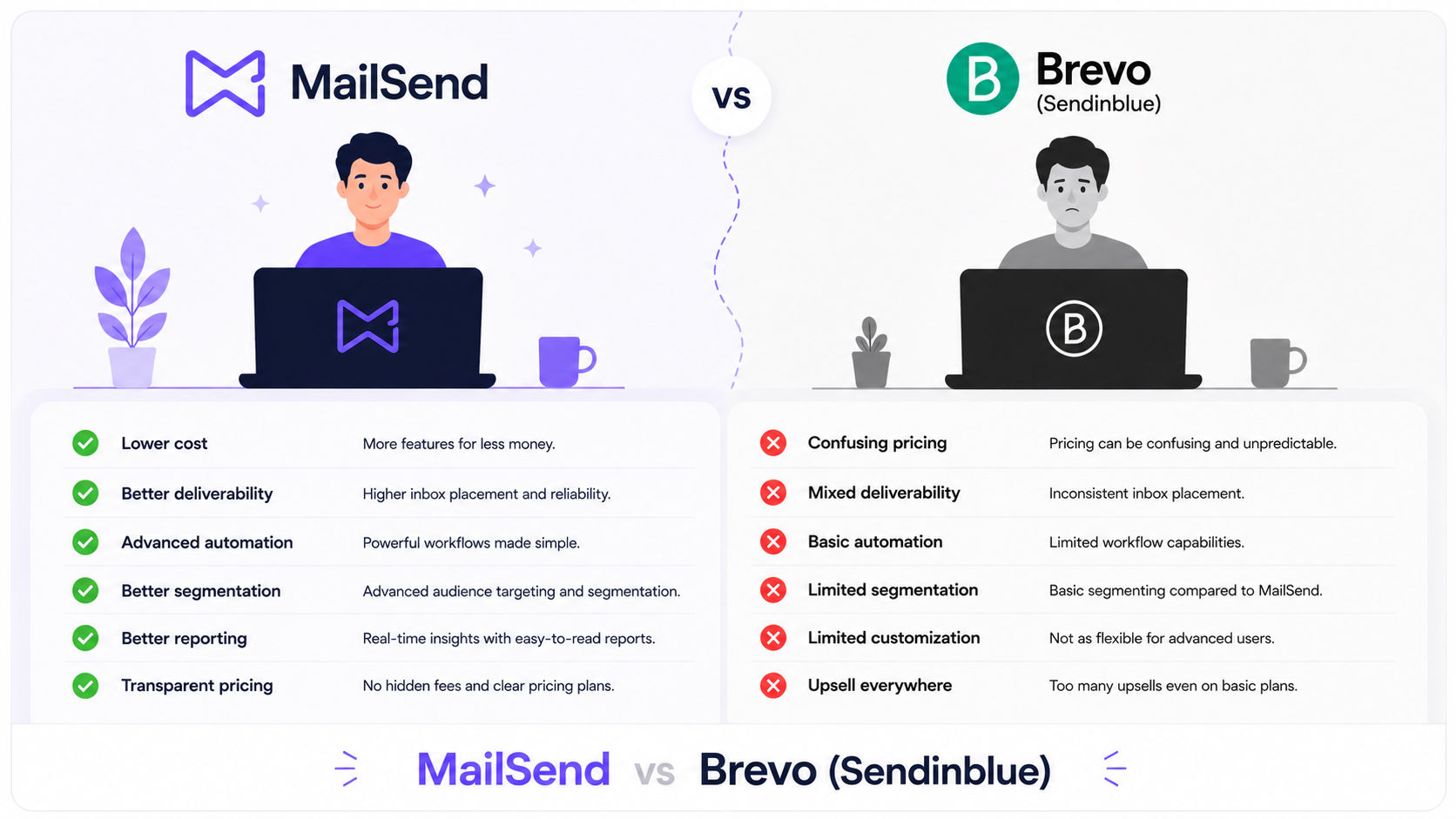
Brevo Alternative
Brevo's pay-per-send model is unique but the platform has an older UI, limited automation depth, and a steeper learning curve than needed for most teams.
Resend Alternative
Resend is a developer-first transactional API - it has no visual campaign builder, no contact management, and no marketing automation. Mailsend covers everything Resend does, plus a full marketing layer.

MailerSend Alternative
MailerSend is a solid transactional email tool, but its marketing campaign features are limited and it lacks the automation depth that growing teams need.

Postmark Alternative
Postmark is exclusively transactional - no marketing campaigns, no automation, no contact management. Teams that need both must maintain two separate platforms.

Elastic Email Alternative
Elastic Email has mixed sender reputation due to permissive signup practices, an older interface, and complex pricing. Teams focused on deliverability and UX tend to upgrade.

MailerLite Alternative
MailerLite is a solid beginner option but has limited API capabilities, slower feature development, and becomes restrictive as teams grow.

Mailmodo Alternative
Mailmodo's core value proposition - interactive AMP emails - is niche and requires AMP-supporting email clients (primarily Gmail). Standard email marketing is secondary to their product focus.

GetResponse Alternative
GetResponse has accumulated many features over 25+ years that make the platform complex and bloated. Teams that just need email marketing end up paying for webinar and funnel tools they don't use.

ConvertKit Alternative
ConvertKit is purpose-built for creators and newsletters but has limited ecommerce features, basic analytics, and per-subscriber pricing that grows with your audience.

Selzy Alternative
Selzy is a budget option with basic features primarily serving Eastern European markets. Growing teams find its automation limited and its deliverability infrastructure less proven internationally.

Mailjet Alternative
Mailjet has stagnated in feature development since its acquisition. Teams report slow product improvements, limited automation, and an interface that hasn't kept pace with modern email platforms.

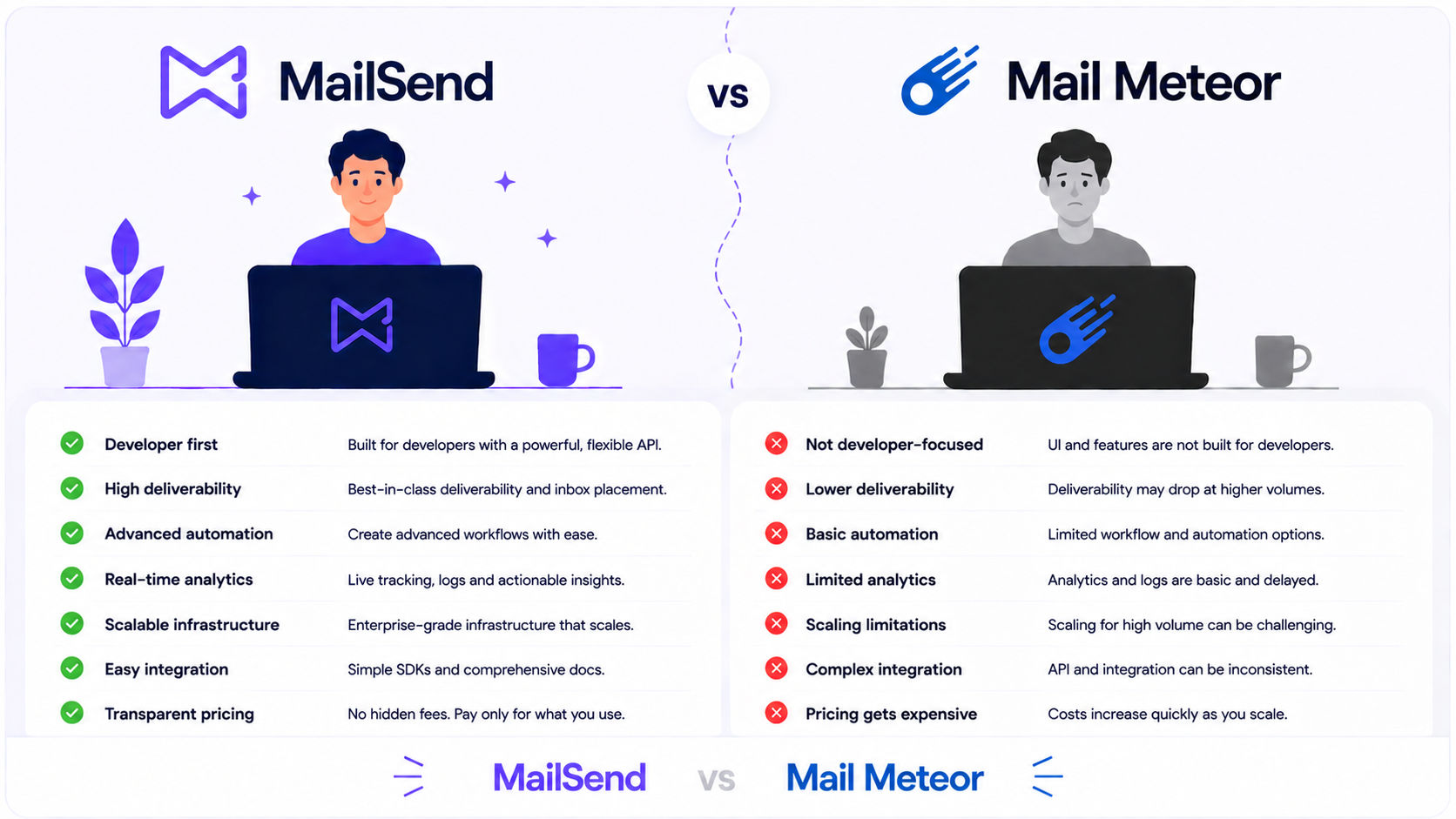
Mailmeteor Alternative
Mailmeteor is a Gmail mail merge tool - it sends emails through your personal Gmail account. This creates significant deliverability, volume, and scalability limitations that a dedicated email platform like Mailsend doesn't have.
Zoho Mail Alternative
Zoho Mail is an email hosting service (like Gmail for business) - not an email marketing platform. Comparing them is like comparing a car to a delivery truck. They solve different problems.